
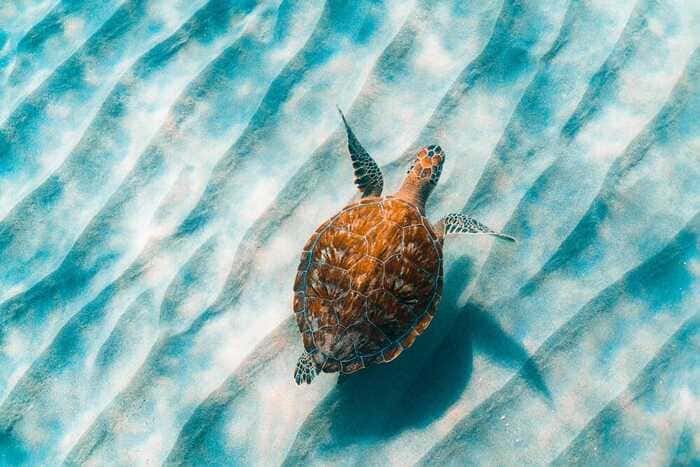
The First Breath Before You Submerge: There’s always a pause before you go under. A moment where everything is still predictable, light behaves normally, movement feels controlled, and sound is familiar. Then you submerge, and all of that changes at once.
Light bends. Motion slows. Sound disappears into something distant. Even the simplest movement becomes deliberate. That shift is where underwater photography begins, not in settings or gear, but in learning how to see differently in an environment that doesn’t follow your usual instincts.
Understanding the Environment Before the Camera
Water isn’t just a setting—it’s an active element in every frame. It softens edges, reduces contrast, and introduces movement even when your subject is still. Visibility changes constantly, depending on depth, particles, and light direction.
Before lifting the camera, observe how the environment behaves. Where does the light enter? How quickly does it fall off? How does the subject move when they stop trying to control their body?
Underwater photography isn’t about forcing a composition; it’s about recognizing one as it forms.
Letting Light Do the Work
Light underwater behaves differently enough that it becomes your main subject. Dynamic range is limited, highlights near the surface can blow out quickly, while shadows deepen faster than expected. At the same time, color shifts toward blue and green.
Instead of correcting these changes completely, work with them. Stay closer to the surface to retain natural light, and position the subject between the camera and light source to create depth and separation.
You’re not just exposing for the subject—you’re exposing for how light travels through water.
Movement Over Control
Trying to control a subject underwater rarely works. Static posing feels unnatural. Water introduces delay—fabric floats, hair drifts, and movement continues even after the subject stops.
Instead of rigid posing, guide motion. A gentle push, a slow exhale, a natural drift. Shoot in bursts and wait for alignment—when body, fabric, and light naturally fall into place.
The strongest frames come from timing, not control.
Composition Beneath the Surface
Composition underwater requires adaptation. Distortion near the surface and floating elements create unpredictable framing.
Diagonal lines feel more natural than vertical ones, reflecting how bodies move in water. Negative space becomes powerful, surrounding the subject and emphasizing scale or isolation.
Getting closer—often with a wide-angle lens—reduces water between camera and subject, improving clarity and preserving detail.
Dialing in Exposure Without Losing the Scene
Adjust shutter speed to freeze motion while keeping natural softness. Balance aperture for depth and subject separation. Shift ISO based on depth and light availability.
There’s no fixed setting underwater. Light changes constantly. The goal isn’t consistency—it’s responsiveness.
Gear That Works With You, Not Against You
Underwater gear should be simple and reliable. Wide-angle lenses allow close proximity and better clarity. Dome ports maintain natural perspective, and underwater housings ensure full control access.
- Fast focus performance in low contrast
- Easy button access underwater
- Reliable battery life
The goal is not complexity—it’s efficiency in a fast-changing environment.
Working in Short, Intentional Sequences
Underwater shooting happens in cycles. You prepare above water, submerge, capture short bursts, then surface to reset.
Communication is limited underwater, so clarity beforehand is essential. Each dive is intentional and focused.
Physical awareness matters—breath control, fatigue, and water temperature all affect performance and timing.
Where the Frame Comes Together
The best images rarely come from planned moments. They appear between actions—when the subject relaxes, fabric settles, or light aligns perfectly.
It might be a subtle movement, a shift in posture, or a brief moment of balance. These details define the entire frame.
You create the conditions, then wait.
FAQs
1. What makes underwater photography different?
Light fades faster, colors shift, and movement slows. Success comes from adapting to the environment.
2. What camera settings work best underwater?
Use a fast shutter, balanced aperture, and flexible ISO based on depth and lighting.
3. Why use wide-angle lenses underwater?
They allow closer shooting, improve clarity, and capture more environment for depth.
4. How do you direct subjects underwater?
Guide natural movement instead of posing—gentle motion creates fluid, realistic frames.
5. Is natural light better underwater?
Yes, it produces softer, more natural results, while artificial light requires careful handling.
Closing the Surface
Perfect underwater images aren’t created through control—they’re discovered through observation. Over time, you begin to anticipate how light, motion, and composition come together.
You stop forcing moments. You start recognizing them.
That’s when the images feel natural—not staged, not constructed, but captured in a fleeting moment.
If you’re ready to refine your approach to underwater photography with intention and technique, Max Blakesberg Studios is where that journey begins.